Tel:0411-87935556
E-mail:dlpinhong@163.com
Address:No. 1, building 8, Hongxing Industrial Park, Dalian Economic and Technological Development Zone, Dalian
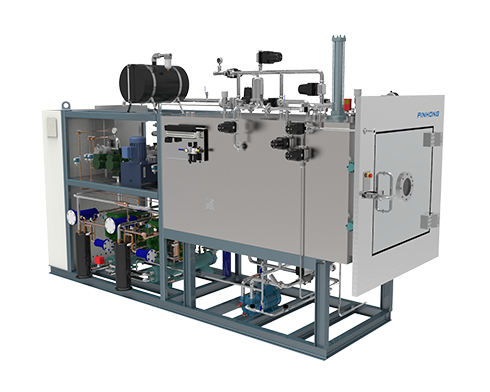
The use of food freeze-drying machines should revolve around three core aspects: ensuring food safety, ensuring freeze-drying effectiveness, and extending equipment lifespan. The focus should be on material pretreatment, standardized operating procedures, and equipment maintenance. Specific precautions can be divided into three stages: before use, during use, and after use
1、 Before use: Make 3 core preparations (to avoid basic mistakes)
Material pretreatment must comply with regulations and eliminate safety hazards
The materials need to be thoroughly cleaned, peeled, and seeded (such as fruits and vegetables). If it is meat, the fascia should be removed and cut into even small pieces (recommended thickness of 5-15mm) to avoid uneven freeze-drying of large pieces or sticking to the tray.
Do not put materials with bones, shells (such as fruit shells, shrimp shells) or hard impurities to prevent scratching the inner wall of the freeze-drying chamber or damaging the vacuum pump; Materials with high moisture content (such as fresh fruit juice) need to be pre frozen into blocks to prevent liquid materials from seeping into equipment pipelines.
Equipment inspection and cleaning to ensure no residue
Check the sealing strip of the freeze-drying compartment door: If any deformation, cracking, or residual material is found on the sealing strip, it should be wiped clean with warm water and neutral detergent. If necessary, the sealing strip should be replaced to prevent insufficient vacuum from affecting the freeze-drying effect.
Clean the tray and partition: Wipe the tray with a soft cloth (avoid scratching the surface with a steel wire ball) to ensure that there is no powder or oil residue from repeated freeze-drying; Check the oil level of the vacuum pump. If the oil level is below the scale line or the oil color turns black (normally light yellow), it is necessary to replenish or replace the dedicated vacuum pump oil.
Pre freezing parameters need to match material characteristics
The material needs to be pre frozen in an environment below -40 ℃ for 4-8 hours (the specific time depends on the thickness of the material) to ensure complete freezing into a solid state and avoid "bottle spraying" (liquid material boiling and overflowing) of unfrozen materials during freeze-drying.
After pre freezing, quickly transfer the materials to the freeze-drying bin to avoid thawing and softening of the materials (thawing can cause moisture redistribution and affect the shape after freeze-drying). Wear clean gloves during transfer to prevent hand oil contamination of the materials.
2、 In use: Follow 4 operating points (ensuring effectiveness and safety)
Control freeze-drying parameters to avoid blind adjustments
Vacuum degree: After starting the vacuum pump, the vacuum degree of the freeze-drying chamber should be controlled at 10-50Pa (specific reference material requirements). If the vacuum is too low, it will slow down the freeze-drying speed, and if it is too high, it may cause excessive loss of volatile components (such as aroma substances) in the material.
Temperature: The temperature of the heating partition should be gradually increased (such as increasing by 5 ℃ to 30 ℃ per hour from -10 ℃) to avoid sudden heating that may cause the material surface to melt and crust (crust will hinder the sublimation of internal moisture, forming a "dry outside and wet inside" situation).
Time: Set the freeze-drying time according to the type of material (such as 8-12 hours for vegetables and 12-24 hours for meat). It can be determined by observing the shape of the material in the freeze-drying chamber - if the material is fluffy, the weight is significantly reduced, and there is no adhesion, it is considered freeze-drying complete, avoiding excessive freeze-drying that may cause the material to become brittle.
Prohibit opening doors or interrupting operation midway
If the chamber door is opened without authorization during the freeze-drying process, air will enter the freeze-drying chamber and damage the vacuum environment, causing the sublimated moisture to re condense on the surface of the material. It is necessary to re vacuum and extend the freeze-drying time; If an emergency shutdown is required, the heating switch should be turned off first, and the door should be opened after the vacuum level drops to atmospheric pressure.
Avoid frequent starting and stopping of the equipment. Frequent starting and stopping of the vacuum pump will shorten its service life, and each restart will require re vacuuming, increasing energy consumption.
Observe the operation status of the equipment and promptly handle any abnormalities
If you hear abnormal noise from the vacuum pump (such as harsh noise) or smell burnt smell during operation, immediately stop the machine for inspection, which may be due to vacuum pump failure or pipeline blockage; If the vacuum degree of the freeze-drying chamber continues to decrease (the instrument display value increases), it is necessary to check whether the door seal is tight or whether the vacuum pump leaks oil.
Do not touch the outer wall of the freeze-drying chamber or the heating partition during device operation to avoid low-temperature frostbite (chamber wall temperature can reach -40 ℃) or high-temperature burns (partition temperature can reach 50 ℃ during heating).
Food safety protection to avoid cross contamination
Different types of materials (such as meat and fruits) need to be freeze-dried separately to avoid cross contamination of flavors; After each freeze-drying is completed, the freeze-drying chamber needs to be disinfected with ultraviolet light for 30 minutes (some equipment comes with disinfection function) to prevent microbial growth.
Operators need to wear masks and gloves, and tools that come into contact with materials (such as shovels and trays) need to be disinfected in advance to meet the hygiene requirements of food processing. Especially when used in commercial production, the name, time, and parameters of each freeze-dried material need to be recorded for traceability.
3、 After use: Perform 3 maintenance tasks (extend equipment lifespan)
Clean the equipment in a timely manner to avoid residual corrosion
After freeze-drying is completed, wait for the temperature of the freeze-drying chamber to rise to room temperature and the vacuum degree to return to normal pressure, then open the chamber door to take out the material, and use a soft brush to clean the residual material powder in the chamber to avoid powder entering the vacuum pump pipeline and causing blockage.
Wipe the inner wall of the freeze-drying chamber with warm water and neutral cleaner. If there are stubborn stains (such as residual sugar materials), soak for 10 minutes before wiping. Do not use acidic or alkaline cleaners (which can corrode the stainless steel inner wall).
Vacuum pump and pipeline maintenance
After each use, before turning off the vacuum pump, open the vent valve to allow air to slowly enter the vacuum pump, avoiding the vacuum pump oil from being sucked back into the freeze-drying chamber; After 100 hours of operation, the vacuum pump oil needs to be replaced. When replacing, the old oil should be completely drained to avoid mixing new and old oil and affecting the lubrication effect.
Regularly check the intake filter element of the vacuum pump. If the filter element is clogged (manifested as slower vacuum pumping speed), it needs to be disassembled, cleaned or replaced to prevent impurities from entering the internal wear parts of the vacuum pump.
Equipment storage and long-term idle protection
Short term use (1-2 weeks): After cleaning the equipment, keep the freeze-drying compartment door slightly open (leaving a 5mm gap) to avoid long-term compression deformation of the sealing strip; The vacuum pump should be placed in a dry and ventilated area to prevent rusting inside in a humid environment.
Long term idle (more than 1 month): Drain the vacuum pump oil, cover the equipment with clean cloth to avoid dust accumulation; Start the equipment every 3 months and run it for 30 minutes to prevent the vacuum pump components from sticking and ensure normal operation for the next use.
130 8413 3386
Tel:0411-87935556
E-mail:dlpinhong@163.com
Address:No. 1, building 8, Hongxing Industrial Park, Dalian Economic and Technological Development Zone, Dalian

More highlights are waiting for you